Artifact
Amarna Letters
c. 1350 BC
Provide an invaluable snapshot of Canaan's political chaos during the period between the Exodus and Israelite settlement, with possible references to the Hebrews themselves. They confirm that Canaan was a land of small, feuding city-states under weak Egyptian oversight — exactly the conditions described in the biblical conquest narratives.
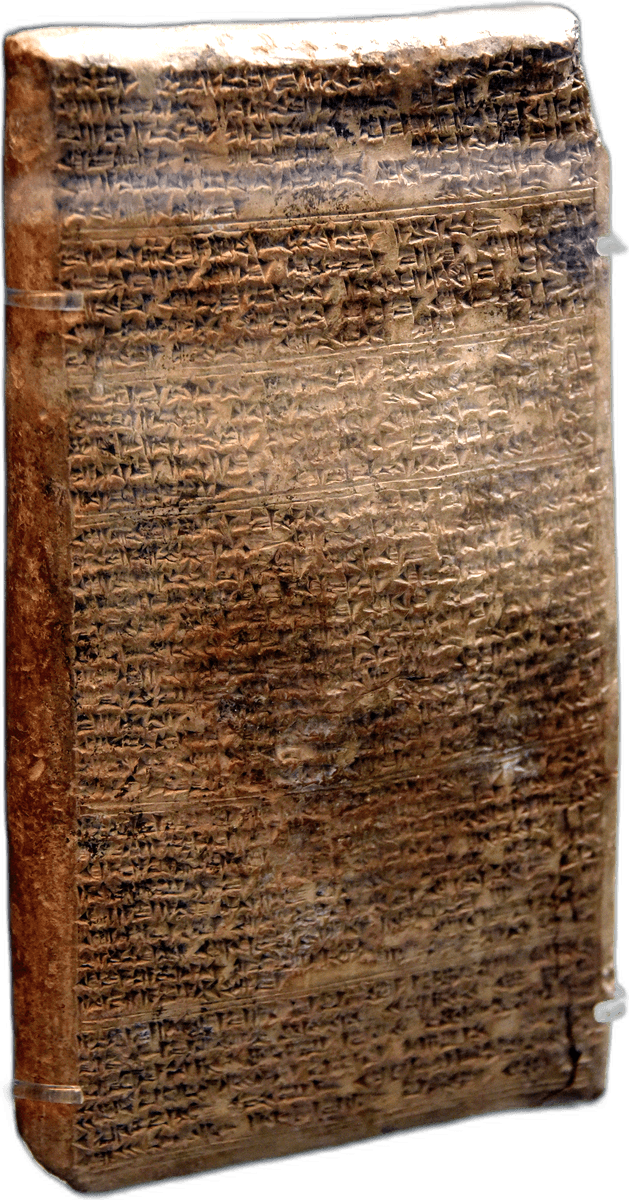
About this artifact
Discovered accidentally in 1887 by a local Egyptian woman digging in the ruins of Akhetaten (modern Tell el-Amarna), the short-lived capital of the pharaoh Akhenaten. The collection of nearly 400 cuneiform tablets represents diplomatic correspondence between the Egyptian pharaohs Amenhotep III and Akhenaten and rulers across the Near East, dating to approximately 1350 BC. Several letters from Canaanite vassal kings desperately plead for Egyptian military help against invading 'Habiru' — a term that may be linguistically related to 'Hebrew' — who were destabilizing the region. The letters paint a vivid picture of Canaan as a fractured land of competing city-states, matching the political landscape implied in the books of Joshua and Judges.
Diplomatic letters in Akkadian cuneiform from around 1350 BC, between Egypt's pharaohs and the kings of Canaan — they reveal a land of feuding city-states pleading for help against marauding 'Habiru,' the very turmoil the conquest narratives describe.