Artifact
Black Obelisk of Shalmaneser III
c. 841 BC
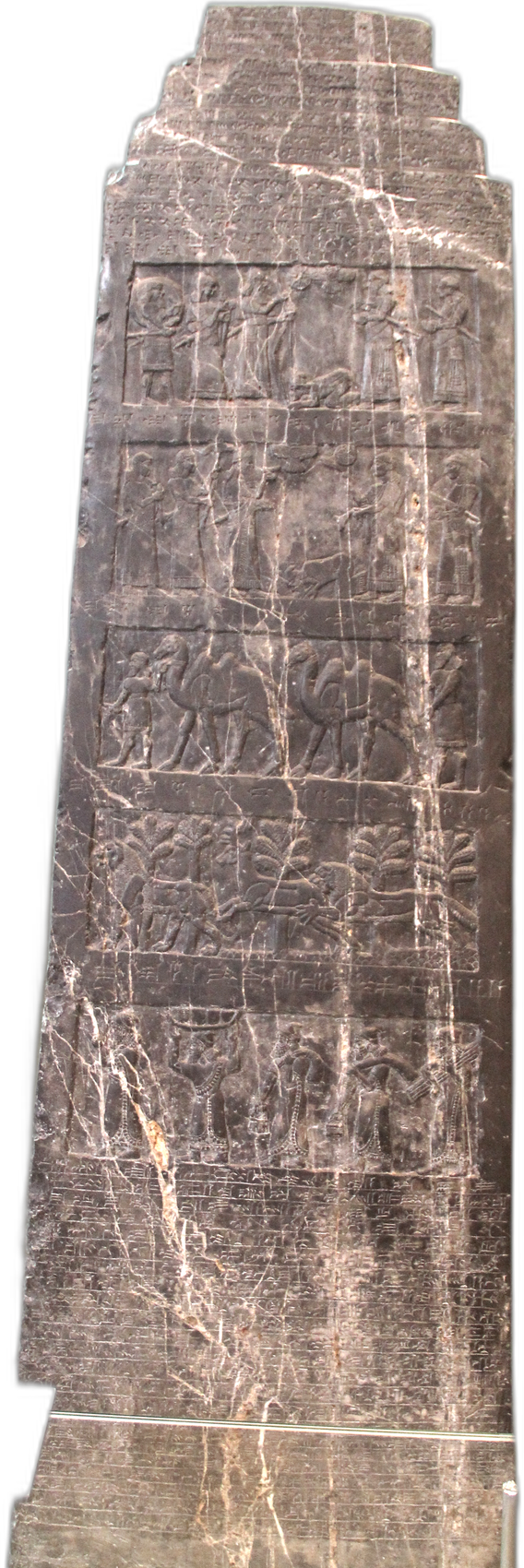
Contains the only known ancient depiction of a biblical king, showing Jehu prostrated before the Assyrian monarch. It provides crucial extra-biblical evidence for Israelite-Assyrian relations and confirms the historicity of the Israelite monarchy in the 9th century BC.
About this artifact
Discovered in 1846 by Austen Henry Layard during his excavations at the Assyrian capital of Nimrud (biblical Calah) in modern Iraq. This six-and-a-half-foot-tall black limestone obelisk, dating to 841 BC, is carved with five rows of relief panels depicting tribute bearers from five subjugated kingdoms. The second register depicts 'Jehu, son of Omri' — King Jehu of Israel — kneeling and kissing the ground before Assyrian King Shalmaneser III, making it the only known ancient image of any Israelite or Judean king. The accompanying cuneiform text records the gold, silver, and other luxury items Jehu offered as tribute, an event not recorded in the Bible itself.
Raised in Assyria around 841 BC, during the divided kingdom — its carved panels show Jehu of Israel bowing before the Assyrian king, the only known portrait of a ruler named in the Bible.