Artifact
Moabite Stone (Mesha Stele)
c. 840 BC
Provides remarkable corroboration of the biblical narrative of Israel's conflict with Moab, including specific details about Israelite control of Moabite territory. It is also one of the longest Iron Age inscriptions ever found in the region and contains the divine name Yahweh.
About this artifact
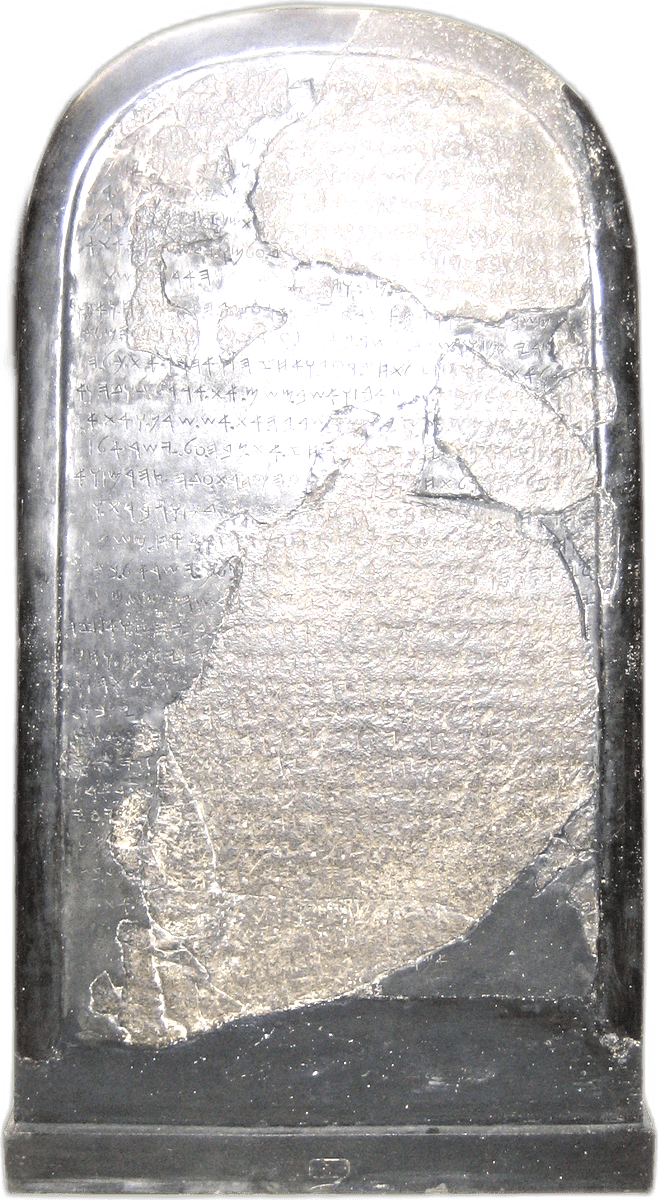
Discovered in 1868 by Frederick Augustus Klein, a German Anglican missionary, at the ancient site of Dibon (modern Dhiban) in Jordan. The black basalt stele was erected by King Mesha of Moab around 840 BC and records his revolt against Israelite domination following the death of King Ahab. The 34-line inscription mentions the Israelite God Yahweh by name, references the tribe of Gad, and describes Mesha's building projects and military victories — directly paralleling the account in 2 Kings 3. The stone was nearly destroyed when local Bedouin broke it apart, but a paper squeeze made before its destruction allowed scholars to reconstruct the text.
Erected by King Mesha of Moab around 840 BC, during the divided kingdom — it celebrates his revolt against Israel after the death of Ahab, the same rebellion told from Israel's side in 2 Kings 3, and names Yahweh in stone.