Artifact
Hezekiah's Tunnel Inscription
c. 701 BC
One of the most remarkable direct archaeological confirmations of a specific biblical construction project, validating the biblical account of Hezekiah's preparations against the Assyrian threat. The tunnel itself remains intact and walkable today beneath Jerusalem.
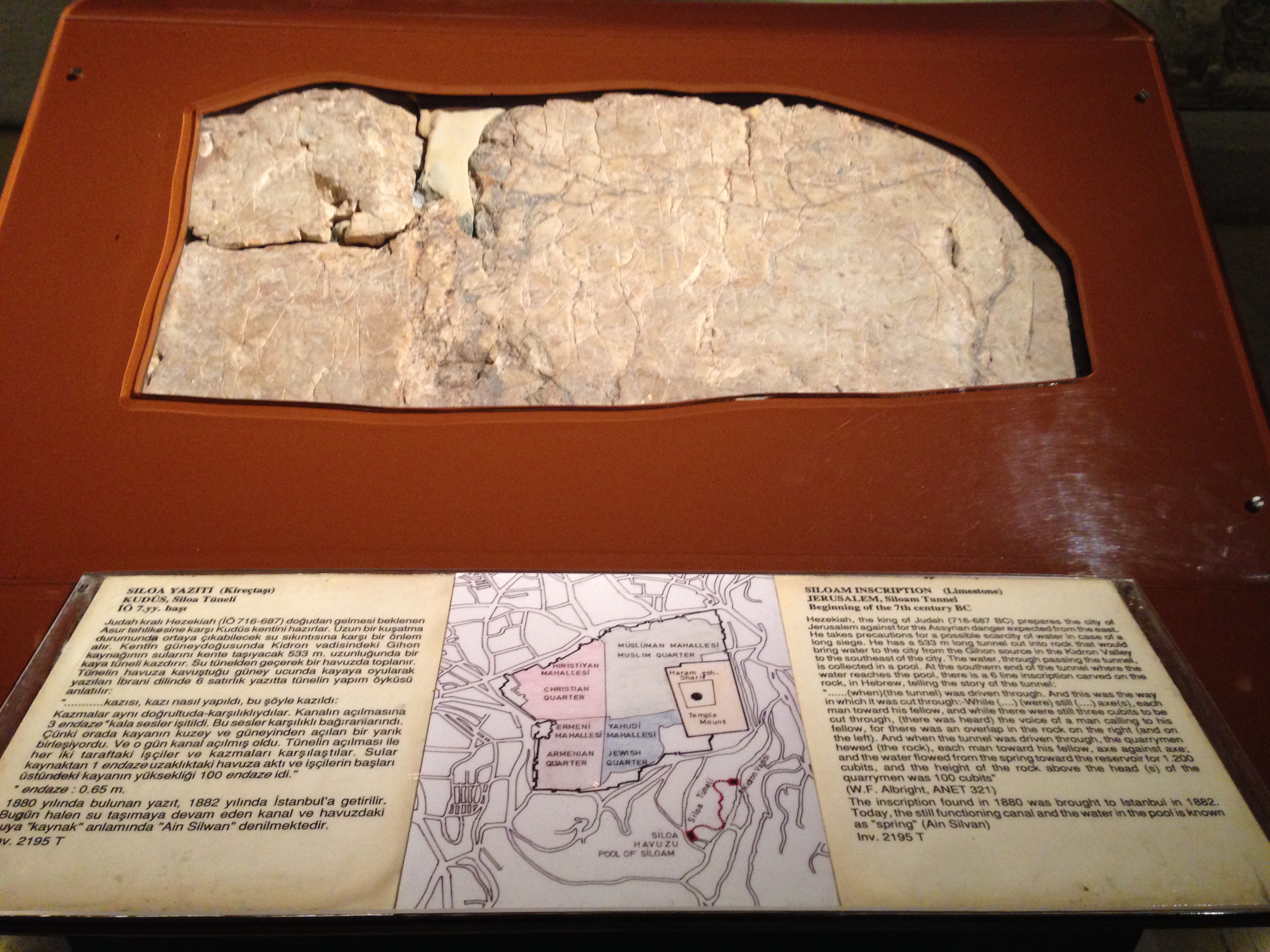
About this artifact
Discovered in 1880 by a boy wading through Hezekiah's Tunnel (the Siloam Tunnel) in the City of David, Jerusalem. The six-line paleo-Hebrew inscription, carved into the tunnel wall about 20 feet from the Siloam Pool end, describes the dramatic moment when two teams of miners digging from opposite ends heard each other's picks and broke through to meet in the middle. The 1,750-foot tunnel was engineered around 701 BC by King Hezekiah to channel water from the Gihon Spring inside the city walls in preparation for the Assyrian siege under Sennacherib, exactly as described in 2 Kings 20:20 and 2 Chronicles 32:30. The inscription is now housed in the Istanbul Archaeological Museum.