Artifact
James Ossuary
c. AD 62
Potentially the earliest archaeological reference to Jesus of Nazareth, and a tangible connection to the family of Jesus described in the Gospels and the leadership of the Jerusalem church. The controversy surrounding its authenticity has made it one of the most debated artifacts in biblical archaeology.
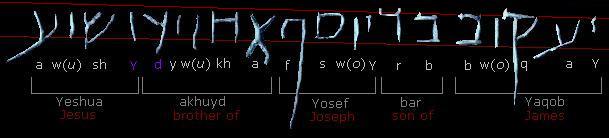
About this artifact
First publicly revealed in 2002 by Andre Lemaire of the Sorbonne, this limestone ossuary bears the Aramaic inscription 'Ya'akov bar Yosef akhui di Yeshua' — 'James, son of Joseph, brother of Jesus.' The ossuary reportedly surfaced on the antiquities market in the 1970s and was acquired by Israeli collector Oded Golan. While the first part of the inscription ('James, son of Joseph') is widely accepted as authentic, a highly publicized forgery trial (2004-2012) debated whether 'brother of Jesus' was added later; Golan was ultimately acquitted. If entirely authentic, it would be the earliest physical artifact directly referencing Jesus of Nazareth, dating to approximately 62 AD when James was martyred according to Josephus.