Artifact
Caiaphas Ossuary
c. AD 30
Physical evidence of the high priest who orchestrated the trial and condemnation of Jesus, transforming a central Gospel figure from a literary character into an archaeologically attested person. The find also illuminates Jewish burial practices and the wealth of the priestly aristocracy in first-century Jerusalem.
About this artifact
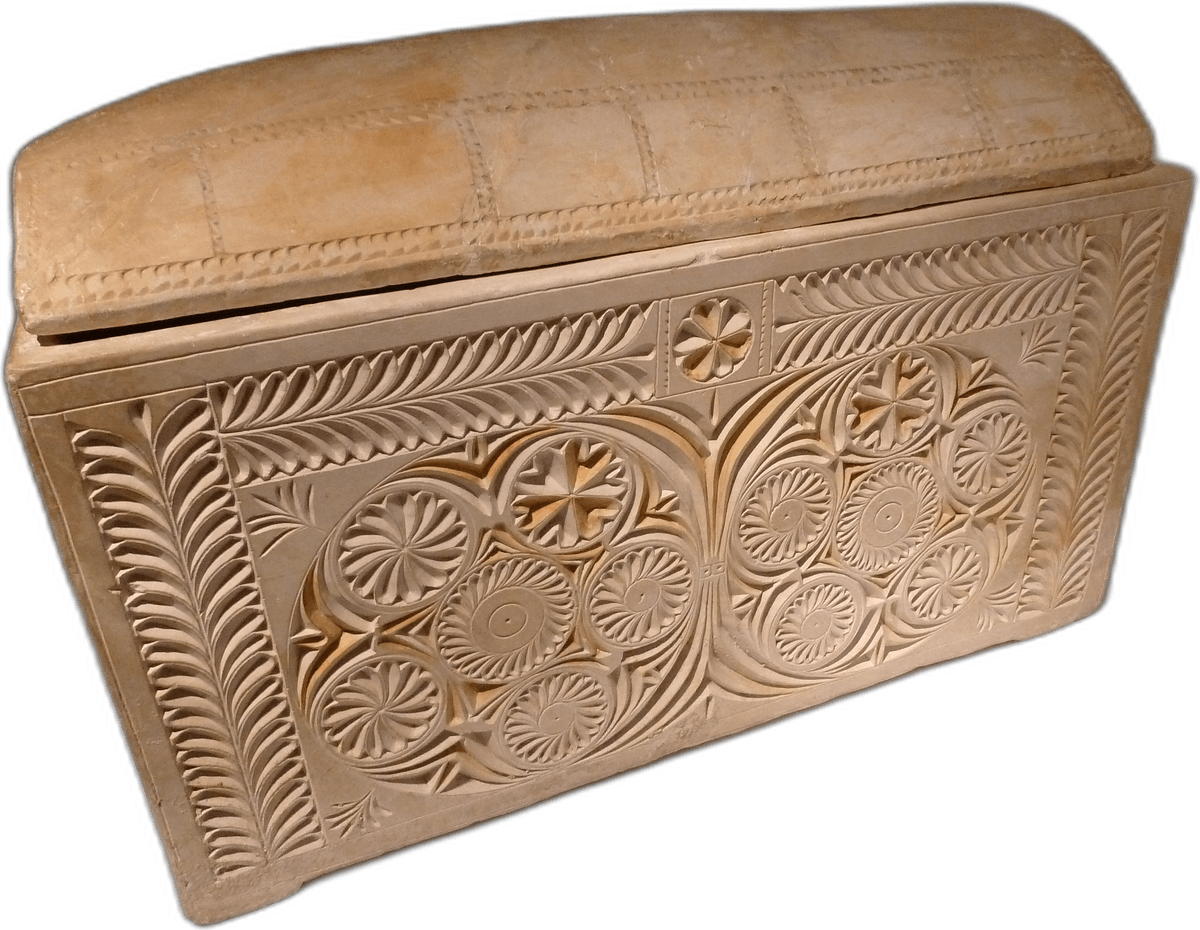
Discovered accidentally in November 1990 by construction workers building a road in Jerusalem's Peace Forest, south of the Old City, when a burial cave collapsed. Archaeologist Zvi Greenhut excavated the cave and found twelve ossuaries (limestone bone boxes), the most ornate of which bore the Aramaic inscription 'Yehosef bar Qayafa' — 'Joseph son of Caiaphas.' Inside were the bones of a 60-year-old man. The first-century Jewish historian Josephus refers to the high priest by his full name 'Joseph who was called Caiaphas,' strongly identifying this as the ossuary of the high priest who presided over the Sanhedrin trial of Jesus described in Matthew 26:57-68. The elaborately carved ossuary reflects the wealth and status of the high priestly family.
An ornately carved first-century bone box inscribed 'Joseph son of Caiaphas,' found in a Jerusalem family tomb — almost certainly the high priest who presided over the trial of Jesus.