Artifact
Pilate Stone
c. AD 26
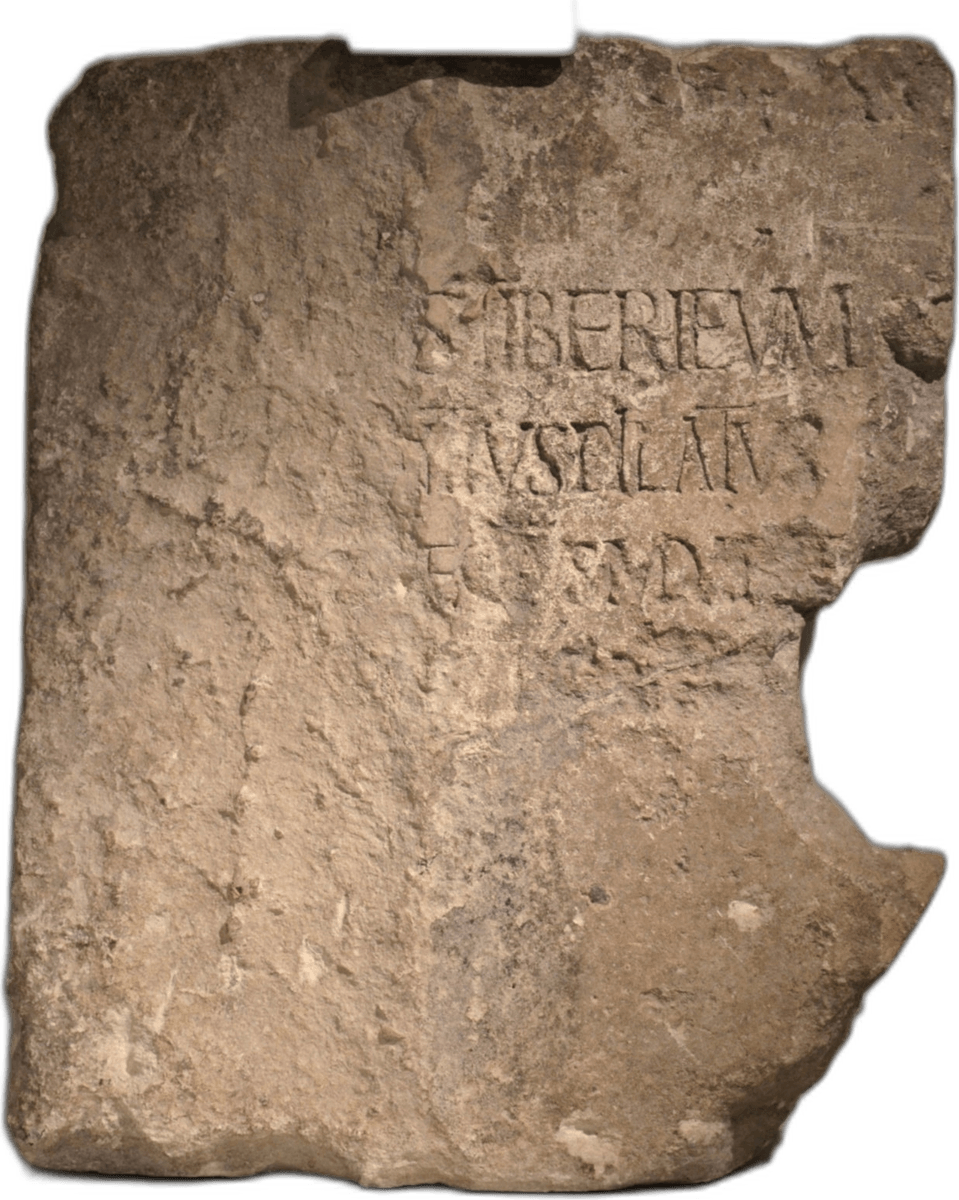
The first and only archaeological evidence directly naming Pontius Pilate and confirming his role as the Roman governor who presided over the trial and crucifixion of Jesus. It transformed Pilate from a purely literary figure into an archaeologically attested historical person.
About this artifact
Discovered in June 1961 by Italian archaeologist Antonio Frova during excavations at the ancient Roman theater in Caesarea Maritima on the Mediterranean coast of Israel. The limestone block bears a partially damaged Latin inscription that reads 'Pontius Pilatus, Prefect of Judaea,' and originally commemorated Pilate's dedication of a building called the Tiberieum in honor of Emperor Tiberius. Before this discovery, Pilate was known only from literary sources — the Gospels, Josephus, Philo, and Tacitus. The inscription also clarified his official title as 'prefect' rather than 'procurator,' correcting a long-standing historical assumption.
Set up at Caesarea Maritima during Pontius Pilate's governorship of Judaea (AD 26-36) — the first and only inscription ever found naming the man who sentenced Jesus, confirming his title as prefect.