Artifact
Nazareth Inscription
c. AD 30
May reflect Roman imperial awareness of early Christian proclamation of the resurrection, representing an attempt to provide an alternative explanation for the empty tomb. Whether or not it is directly connected to Jesus' resurrection, it demonstrates that disturbed graves were a serious concern for Roman authorities in the region during the relevant period.
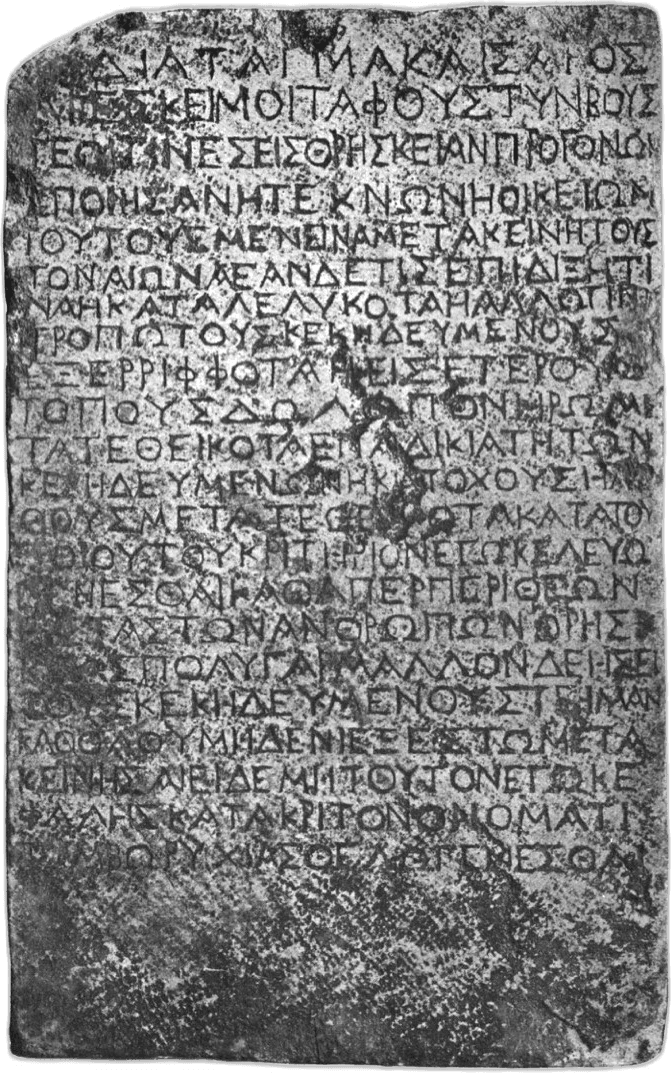
About this artifact
A marble slab acquired from Nazareth in 1878 and sent to the Bibliotheque nationale de France in Paris, where it languished unstudied until Franz Cumont published it in 1930. The Greek inscription contains an imperial edict — attributed to either Augustus or Claudius Caesar — imposing the death penalty on anyone who disturbs tombs, removes bodies, or relocates burial remains. While tomb robbery decrees were not unusual in the Roman world, the extraordinary severity of this penalty (death rather than a fine) and its association with Nazareth have led many scholars to suggest it may represent an official Roman response to early Christian claims about the empty tomb of Jesus. A 2020 isotopic analysis of the marble traced it to the Greek island of Kos, complicating but not disproving the Nazareth connection.
A Greek imperial edict carved in marble in the early first century AD, decreeing death for anyone who disturbs a tomb or moves a body — read by many as Rome's reaction to reports of an empty tomb in Judea.