Artifact
Derinkuyu Underground City
c. AD 200
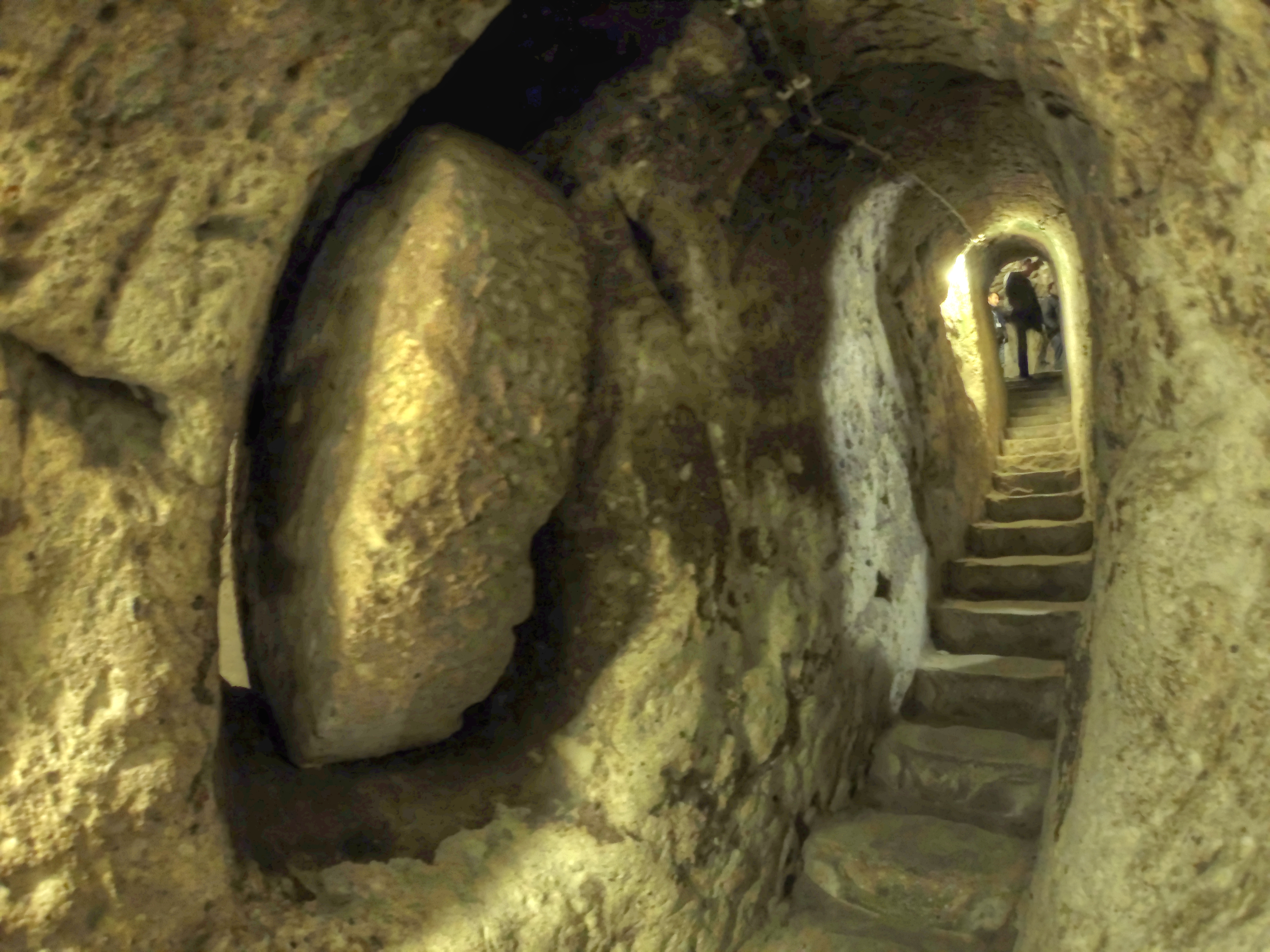
One of the most dramatic examples of how persecuted Christians survived and maintained their faith underground — literally. The presence of churches, baptisteries, and schools deep beneath the earth demonstrates that the early Church did not merely hide but continued to worship, teach, and baptize even under threat of death.
About this artifact
Rediscovered in 1963 when a local resident knocked down a wall during home renovations and found a tunnel leading to an enormous underground city carved from volcanic tuff rock. Derinkuyu extends 18 levels deep and could shelter up to 20,000 people along with their livestock and food stores. Though its origins may date to the Phrygians or Hittites (as early as the 8th century BC), early Christians significantly expanded and used the complex during Roman persecutions in the 2nd-4th centuries AD. The underground city contains churches with cruciform floor plans, baptismal pools, and what scholars believe were missionary training schools. Cappadocia is mentioned in both Acts 2:9 — people from Cappadocia were present at Pentecost — and 1 Peter 1:1, where Peter addresses Christians living in the region.