Artifact
Rosetta Stone
c. 196 BC
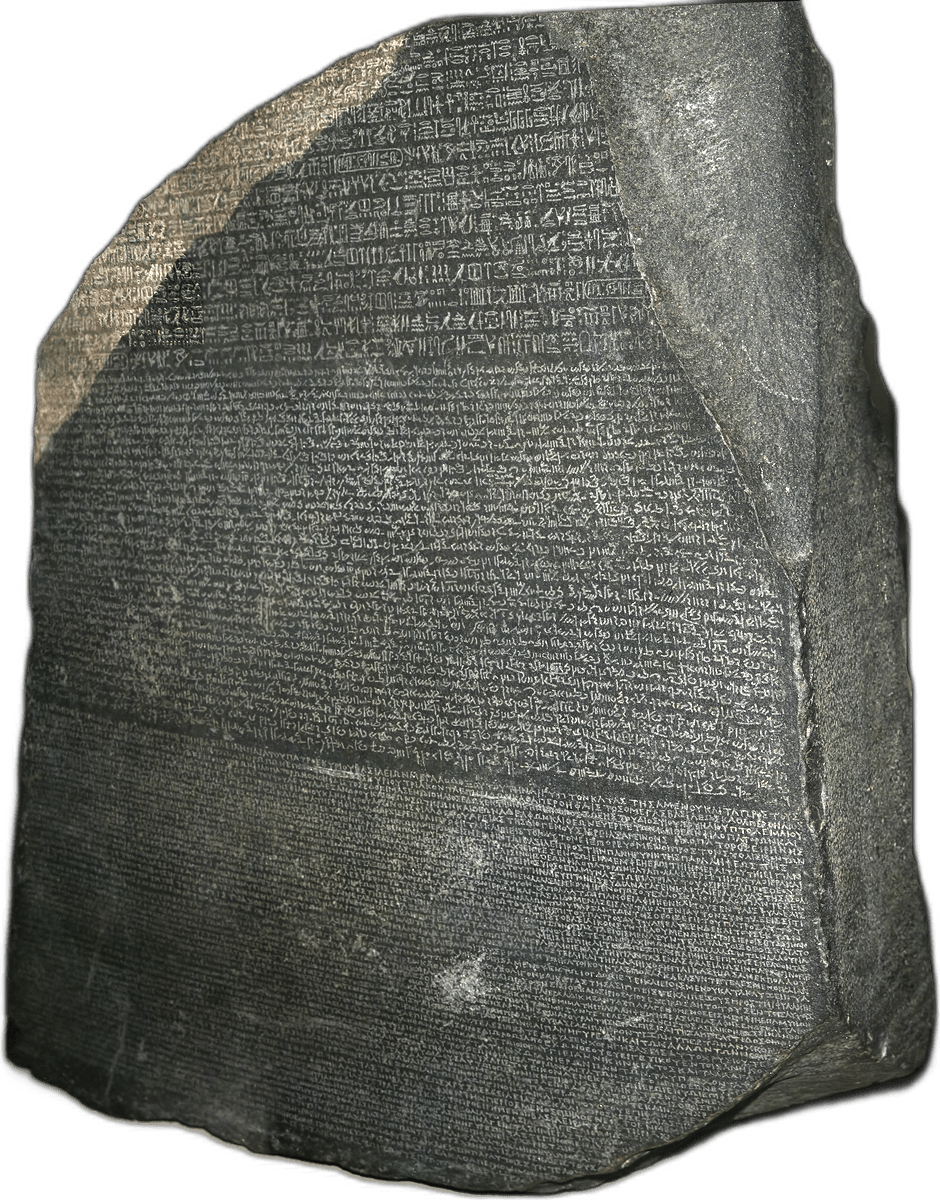
The key that unlocked ancient Egyptian writing, enabling scholars to read thousands of inscriptions and papyri that illuminate the world of the Old Testament. Without it, the entire Egyptian backdrop of Genesis and Exodus would remain largely inaccessible.
About this artifact
Discovered in July 1799 by French soldiers under Captain Pierre-Francois Bouchard during Napoleon's Egyptian campaign, embedded in a wall at Fort Julien near the town of Rosetta (Rashid). The granodiorite stele bears a decree issued in 196 BC by King Ptolemy V, inscribed in three scripts: Egyptian hieroglyphics, Demotic script, and Ancient Greek. It was Thomas Young and Jean-Francois Champollion who used the Greek text as a key to finally crack the hieroglyphic code in the 1820s, unlocking millennia of Egyptian history. This breakthrough opened the entire world of pharaonic Egypt to modern scholars, illuminating the cultural and political landscape in which the patriarchs, Moses, and the Israelites lived.
Carved in Greek-ruled Egypt in 196 BC, in the centuries between the Testaments — its trilingual decree later became the key that unlocked the entire Egyptian world of the Old Testament.